


Agentic AI in 2026: How AI Agents Are Transforming the Future of Technology
Digital Twins combine technologies such as Artificial Intelligence (AI), Internet of Things (IoT), sensors, cloud computing, data analytics, and 3D visualization to monitor and understand real-world systems in near real time.
What is a Digital Twin?
A Digital Twin is a virtual model connected to a physical object or system through data. Sensors and connected devices collect information from the physical environment, while the digital model processes and visualizes that information.
For example, a manufacturing company can create a Digital Twin of a machine to monitor its performance, identify unusual behaviour, and predict when maintenance may be required.
How Digital Twin Technology Works
- IoT sensors and connected devices
- Real-time data collection
- Cloud computing
- Artificial Intelligence and Machine Learning
- Data analytics
- 3D visualization
- Simulation and predictive modelling
These technologies work together to provide organizations with better visibility into physical systems.
Applications of Digital Twins
1. Smart Manufacturing
Manufacturers can use Digital Twins to monitor machines, optimize production processes, reduce downtime, and improve product quality.
2. Smart Cities
Digital Twins can help cities model roads, buildings, transportation systems, energy usage, and public infrastructure. This can support better planning and resource management.
3. Healthcare
Digital Twin concepts are being explored for healthcare applications such as modelling medical devices, hospital operations, and personalized treatment research.
4. Education
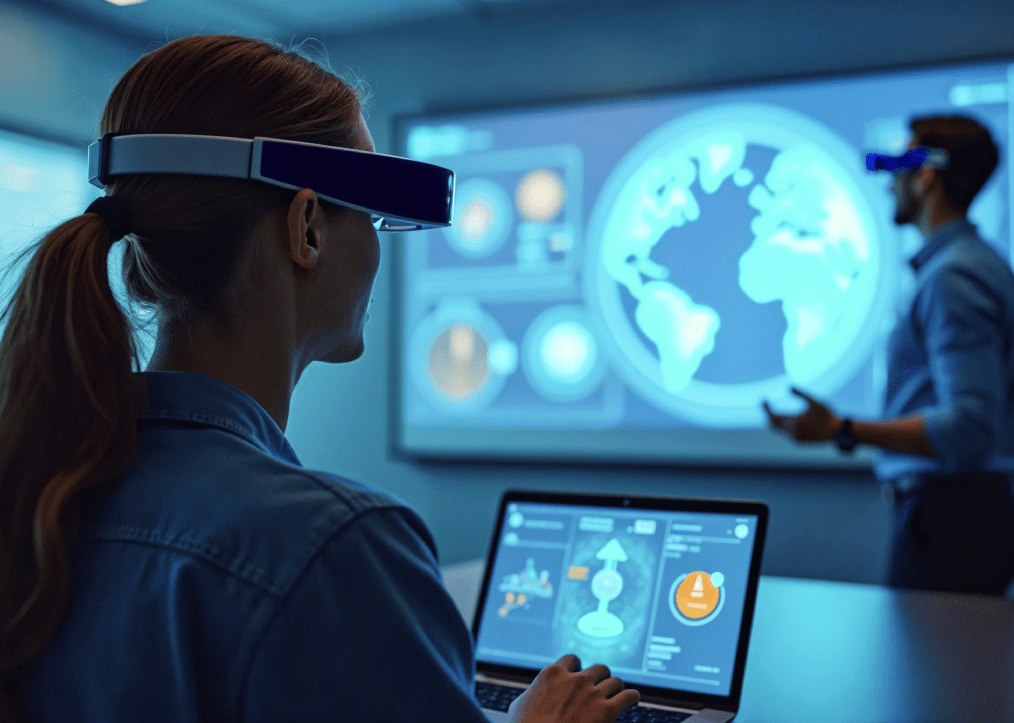
Educational institutions can use Digital Twin concepts for engineering simulations, laboratory training, architecture, smart-campus planning, and practical technology education.
Students can interact with virtual models and understand complex systems without always requiring access to expensive physical equipment.
5. Infrastructure and Construction
Digital Twins can help monitor buildings, bridges, transportation infrastructure, and other assets throughout their lifecycle.
Digital Twins and Artificial Intelligence
AI makes Digital Twins more powerful by analysing large amounts of real-time data. Machine Learning models can identify patterns and potentially predict equipment failures or operational problems before they occur.
This combination of AI + IoT + Digital Twins can help organizations move from reactive maintenance to predictive decision-making.
Benefits of Digital Twin Technology
Digital Twins can provide several advantages
- Better operational visibility
- Predictive maintenance
- Reduced downtime
- Improved decision-making
- More efficient resource utilization
- Faster product development
- Improved training and simulation
- Enhanced infrastructure planning
Challenges and Cybersecurity Risks
Digital Twin systems depend heavily on connected devices and data. This creates cybersecurity and privacy challenges. Organizations need strong authentication, encryption, access controls, secure IoT devices, and continuous monitoring to protect Digital Twin environments.
Career Opportunities for Students
The growth of Digital Twin technology is creating opportunities across multiple technology fields. Students interested in this area can develop skills in
- IoT
- Artificial Intelligence
- Python
- Cloud Computing
- Data Analytics
- Cybersecurity
- 3D Modelling
- Simulation Technology
- Software Development
The Future of Digital Twins
As AI, IoT, cloud computing, and high-speed connectivity continue to develop, Digital Twins are expected to become increasingly important across industries. Future applications could include highly detailed virtual models of factories, cities, infrastructure, and complex systems.
Conclusion
Digital Twin technology represents a major step toward connecting the physical and digital worlds. By combining AI, IoT, cloud computing, sensors, and data analytics, organizations can better understand real-world systems and make more informed decisions.
For students, learning about Digital Twins provides an opportunity to explore one of the emerging technologies shaping the future of engineering, IT, smart cities, manufacturing, and digital transformation.